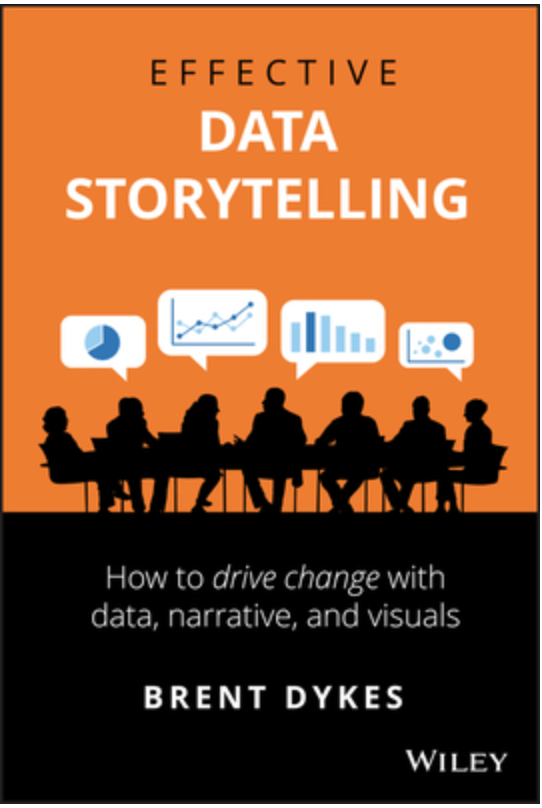
This is a long awaited book review that I have been wanting to do for a while. It took me quite sometime to finish the book because I wanted to chew the contents really well before marking it as read. There’s really so much to take away from the book and I foresee myself re-reading it and definitely using it as a reference for my work.
For someone who is working with data on a day-to-day basis, this book opened up fresh new perspective.
I have always loved the idea of using stories to share and connect with fellow members and this was the perfect starting point for my journey towards it.
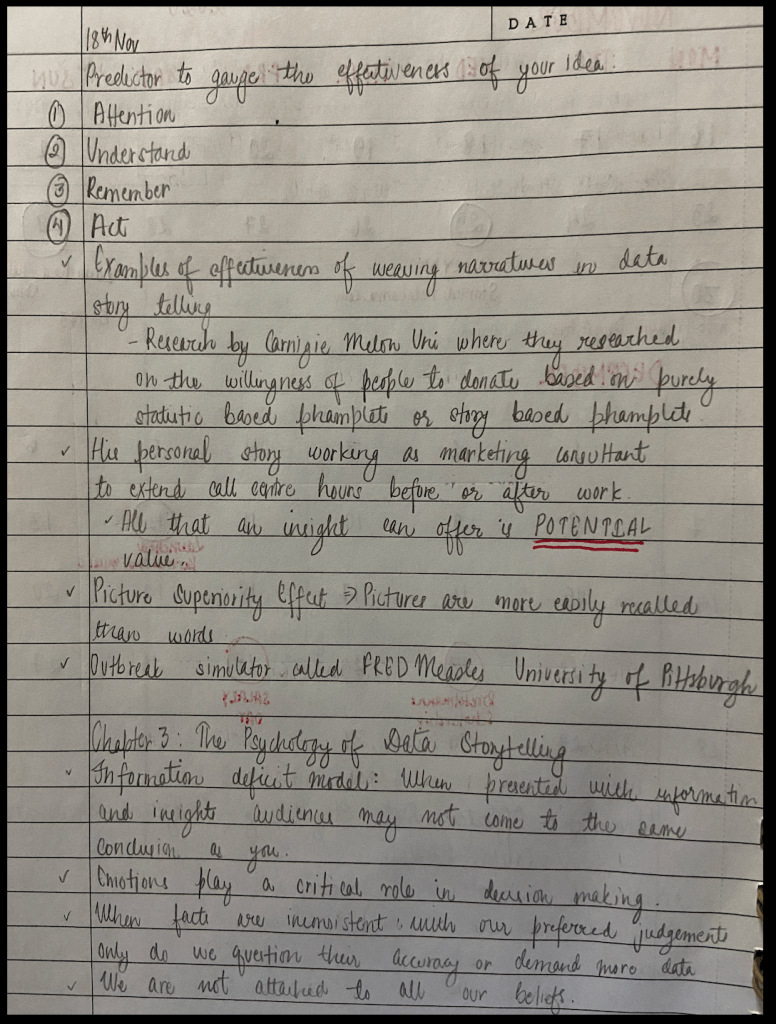
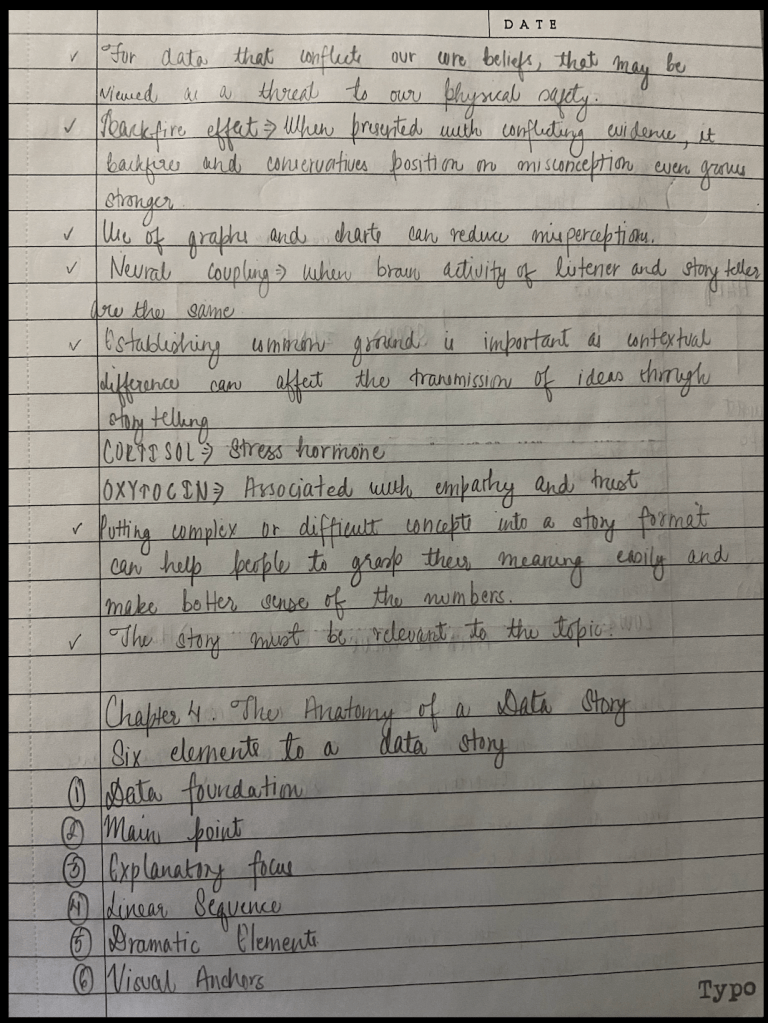
I loved the “Chapter 3: The Pyschology of Data Storytelling” the most. One of the key points that I would like to share from the book is a model called Information Deficit Model. It says that when an information or insights are shared with audiences, they may not arrive at the same conclusion as you. This is when data storytelling comes into play to help our audience see what we see.
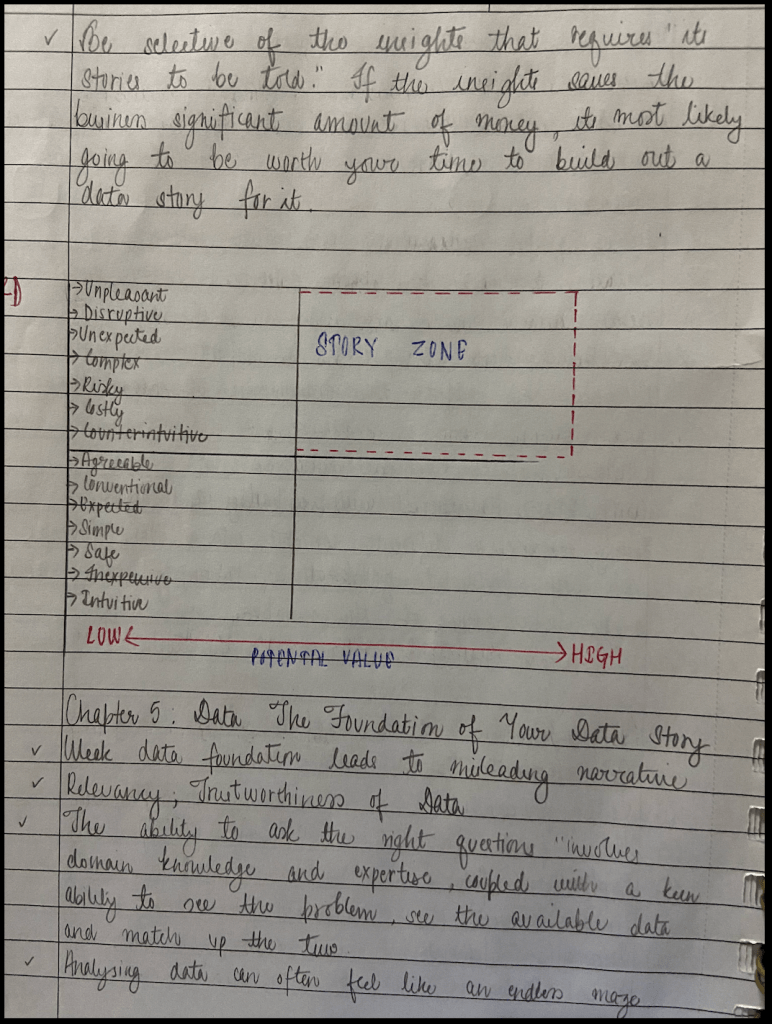
Humans are such complex and unique beings with our own biases, loops and perceived beliefs and opinions. Therefore, as a data storyteller, we need to deal with these if we want them to hop on board with us. I loved the fact that this book guides exactly how to achieve this from explaining intricacies of how to manage these hidden biases, to building hooks to catch their fluttering attention to using different visual elements to facilitate the transfer of information.
I am looking for my next data book to read. If you have any recommendation, would appreciate if you could share it.


Leave a comment